 EN
EN  ไทย
ไทย 
Climate Change and Energy Management
The logistics industry plays a critical role in driving economic growth and connecting supply chains. However, it is also highly dependent on fossil fuel–based energy, which is a key contributor to greenhouse gas (GHG) emissions. Climate change not only has broad environmental impacts globally but also directly affects transportation operations. These include physical risks, such as extreme weather events, flooding, and damage to infrastructure, as well as transition risks, such as evolving environmental regulations, volatile energy prices, and increasing expectations from customers, investors, and regulators to reduce GHG emissions.
Recognizing these challenges, the Company places strong emphasis on systematic climate change and energy management. This includes conducting regular risk assessments, reducing GHG emissions through various initiatives, improving energy efficiency, optimizing energy consumption, and transitioning to clean energy and low-carbon technologies. The Company also prepares for potential energy-related volatility to ensure business resilience. The Company is confident that proactive actions not only help mitigate environmental impacts and support sustainable development goals but also presents opportunities for the Company to reduce long-term energy costs, enhance business continuity, strengthen competitiveness, and build trust among customers, investors, and stakeholders across the logistics value chain.
In 2025, the Company has developed and disclosed its Climate Action plan through participation in the “Jump ” program of the Stock Exchange of Thailand, which aims to promote value creation among listed companies. This initiative will help drives the implementation of structured climate management and the adoption of clean energy practices.
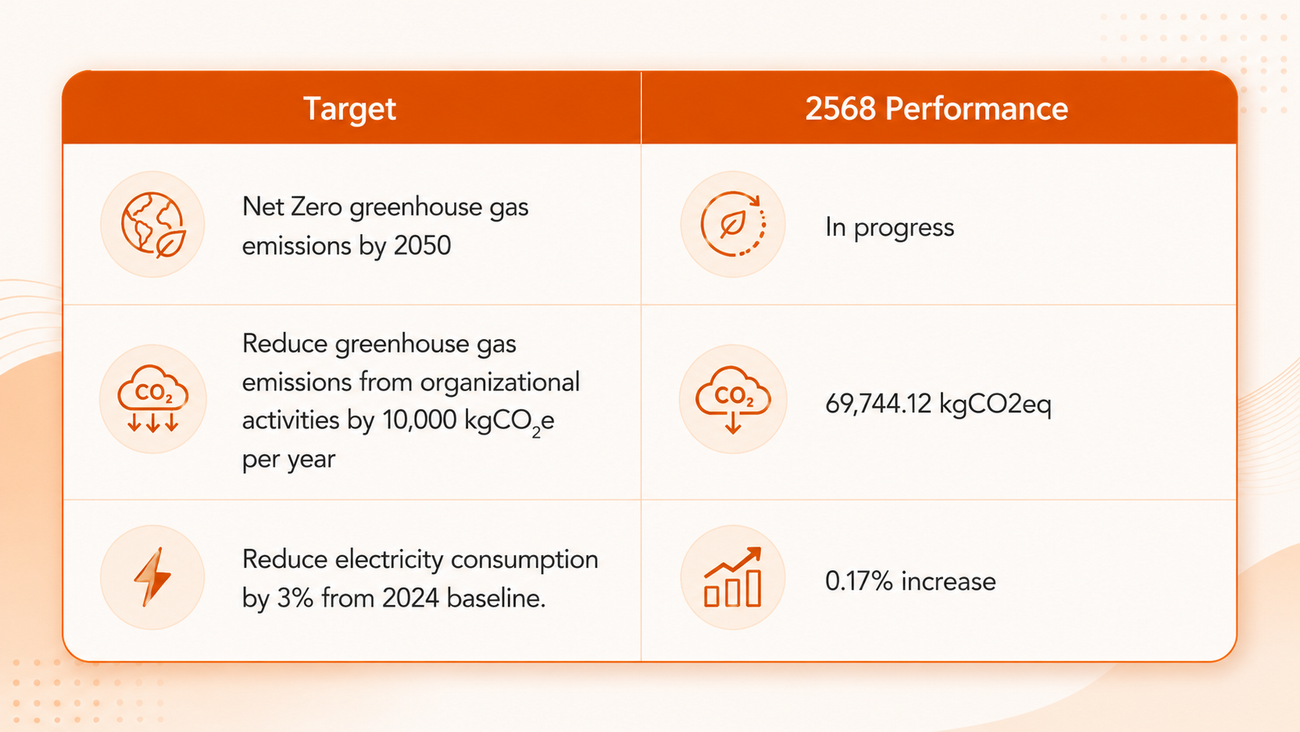
The Company is committed to developing its organizational greenhouse gas (GHG) inventory, setting GHG reduction targets, conducting climate risk assessments, and formulating effective emission reduction and clean energy transition plans in alignment with its ambition to achieve Net Zero emissions by 2050. In addition, the Company plans to enhance data transparency by preparing climate-related disclosures in accordance with international standards, such as IFRS S2 Climate-related Disclosures and the recommendations of the Task Force on Climate-related Financial Disclosures (TCFD)
Governance Structure for Climate Change & Energy Management
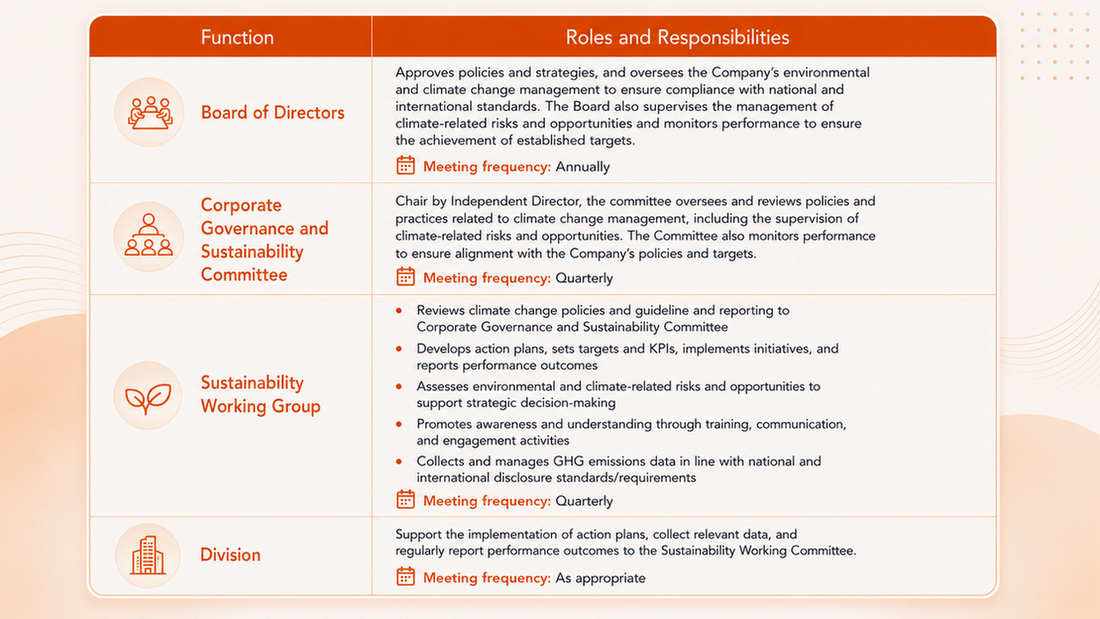
Climate-related Risks and Opportunities
The Company has integrated climate-related risks and opportunities into its Enterprise Risk Management (ERM) framework, encompassing the identification, assessment, prioritization, and monitoring of risks in alignment with operational and strategic risks. This approach supports comprehensive business decision-making on an annual basis and ensures alignment with evolving external conditions and environmental factors. Through its participation in the Stock Exchange of Thailand’s Jump initiative, the Company plans to conduct a structured climate risk assessment covering both physical risks and transition risks, using scenario analysis methodologies in line with internationally recognized practices.
The Company has identified the following key climate-related risks and opportunities as follows
• Climate-related Physical Risks:
Time horizon: medium to long term
Increasing frequency and severity of natural disasters, such as storms, floods, and earthquakes, which may directly and indirectly impact transportation networks and infrastructure. These disruptions could result in service interruptions due to the inability to transport goods.
• Regulatory and Compliance Risks:
Time horizon: short to medium
The tightening of environmental laws and regulations presents potential risks to business operation. Non-compliance or inadequate compliance may adversely affect the Company’s reputation and result in penalties, fines, or lost business opportunities, particularly with customers and partners that prioritize climate change management.
• Opportunities from Environmentally Friendly Services:
Time horizon: short to medium
Growing customer demand for environmentally responsible products and services creates opportunities for the Company to develop innovative service offerings that meet customer needs while reducing environmental impact. This also supports the advancement of new technologies and strengthens the Company’s competitive advantage in sustainable logistics.
Performance Overview
The Company focuses on managing initiatives that enhance resource and energy efficiency and reducing greenhouse gas (GHG) emissions across its value chain. Key initiatives include the development of environmentally friendly logistics and distribution services through the adoption of electric vehicles, the promotion of clean energy through solar panel installations, and the collection and management of greenhouse gas emissions data.
Greenhouse Gas Data Collection and Inventory
In 2025, the Company joined the Stock Exchange of Thailand’s “Jump ” program and is currently in the process of collecting its greenhouse gas (GHG) emission data to support effective GHG reduction planning. The Company has started collecting its GHG Scope 1 and Scope 2 emissions in accordance with national standards and regulatory requirements. The Company expects to complete verification of its GHG inventory in accordance with the Thailand Greenhouse Gas Management Organization (TGO) requirement by 2027. This data serves as a baseline for identifying key emission hotspots, updating GHG reduction targets, and developing actionable decarbonization pathways.
Furthermore, the Company plans to expand its data collection to include material Scope 3 emissions categories and aims to achieve GHG verification in accordance with international standards, such as ISO 14064-1, by 2028.
Energy Efficiency and Clean Energy Initiatives
The Company has initiated energy-saving initiatives with behavioral change campaigns to encourage efficient electricity use. These include turning off air conditioning systems and computers during breaks or extended periods of inactivity, setting air conditioning temperatures at 25°C, and switching off lighting when not in use.
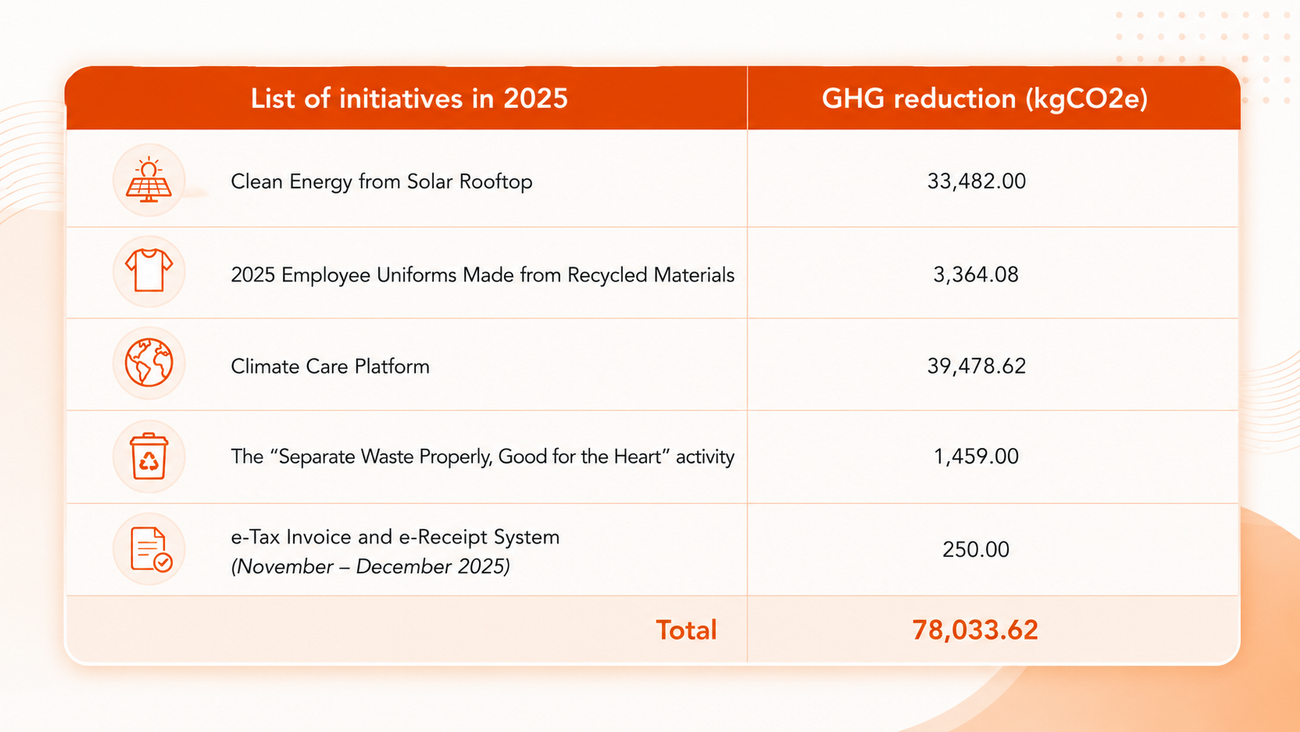
In addition, the Company has invested in solar rooftop systems. The Solar panels have been installed at three locations as follows; the head office, the Rama 3 branch (Leo House), and the third LEO Self Storage facility. In 2025, the Company generated a total of 80,364 kWh of solar energy, resulting in a 4.26% reduction in electricity expenses, equivalent to THB 90,757.22, and a reduction of 33,482 kgCO₂e in greenhouse gas emissions.
Climate Care Platform
The Company has participated in the Climate Care Platform initiative to promote low-carbon behavior in organizational activities. This includes conducting shareholder meetings via electronic platforms (E-AGM), issuing meeting invitations through QR code systems, and reducing paper usage in internal training and seminar activities.
In 2025, the Company achieved a reduction in carbon footprint of 39,478.62 kgCO₂e, equivalent to the annual carbon sequestration capacity of approximately 1,880 trees. The Company will continue to implement and expand Climate Care Platform initiatives on an ongoing basis.
Low-Carbon Transportation and Distribution Services
In response to growing consumer demand for environmentally friendly products and services, the Company is developing low-carbon transportation and distribution services through the adoption of electric vehicles (EVs). This initiative aims to support the reduction of greenhouse gas (GHG) emissions associated with fossil fuel consumption, both at the operational level and in alignment with Thailand’s national GHG reduction plan.
The Company also plans to collect and provide customers with greenhouse gas (GHG) emissions and carbon footprint information based on the use of transportation services. This enables customers to make informed decisions that consider environmental impacts.
This initiative aligns with the Company’s strategic direction to develop innovative service offerings that respond to evolving customer expectations, while reducing environmental impact and creating long-term sustainable value for stakeholders.
Target & Performances
Summary of Climate Change and Energy Performance Data
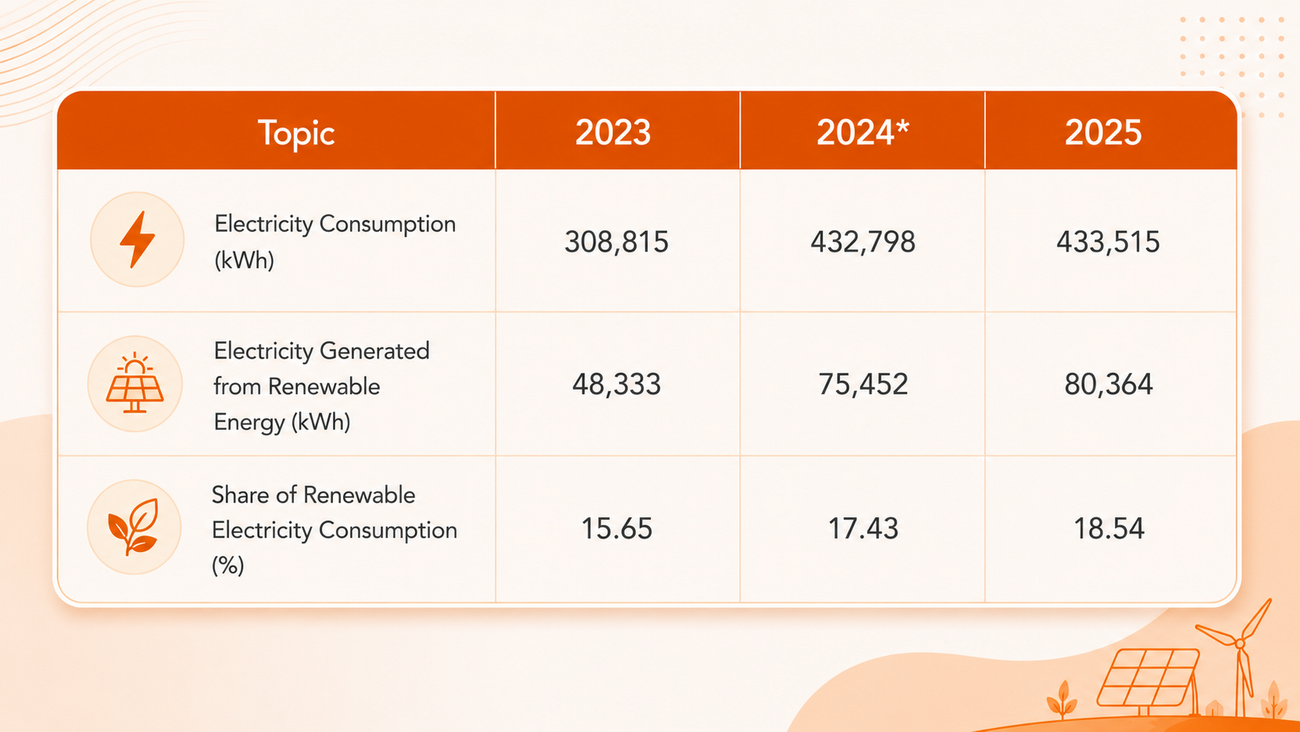
Note: *In 2024, electricity consumption data collection was expanded to cover 2 branches.